
Running the shop · Supermarket Simulator · read from a local copy
The street outside the shop
The street has a petrol station with a pump of its own.
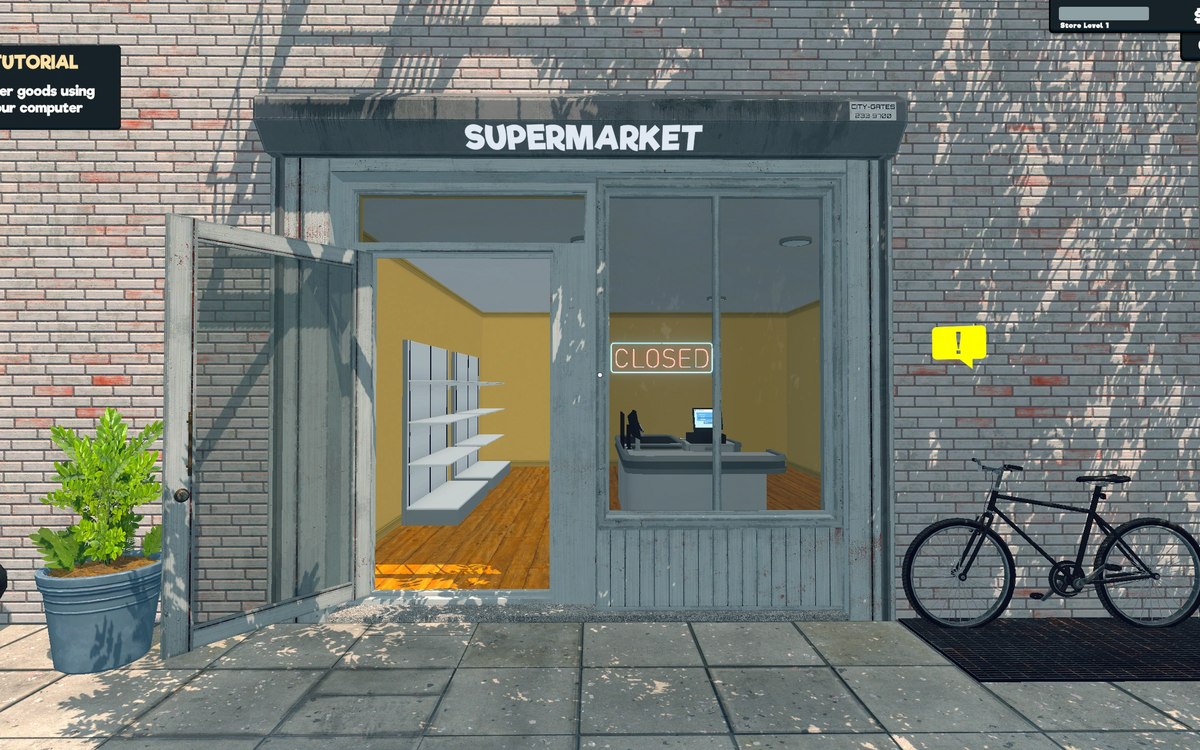
The shop in Supermarket Simulator sits on a street rather than in a void: the game ships a petrol station, street lighting and traffic of its own, and lands some deliveries out on the road.
What the game establishes
- The street has a petrol station with a pump of its own. (checked against the game's own files)
- The street is lit by street lighting with a controller behind it. (checked against the game's own files)
- Traffic outside is run by a manager rather than painted on. (checked against the game's own files)
- Some deliveries and storage are tied to the street. (checked against the game's own files)
- The game ships artwork for the neighbouring buildings. (checked against the game's own files)
- The street's roads are objects of their own — a road base, a creator, a drawer and a loader — and a road knows its connections. (checked against the game's own files)
- The road's lanes are drawn and joined by parts of their own. (checked against the game's own files)
- Waypoints carry settings of their own and are used both to bring traffic in and to find a path. (checked against the game's own files)
- Laying the street out is done in tools of its own, for setting up a road, viewing roads, connecting roads, editing a road and working at an intersection. (checked against the game's own files)
- The game ships its own albedo for the petrol station's forecourt sign, printed with a brand and its fuel grades. (checked against the game's own files)
- The road network is held as active cells and active intersections with a density of its own, with managers over the intersections and over the urban layout. (checked against the game's own files)
- Finding a route and the waypoints it uses have managers of their own. (checked against the game's own files)
- The neighbouring businesses on the street are built as named pieces of their own, a cafe, a restaurant and a pharmacy among them. (checked against the game's own files)
- The buildings on the street carry their own roofs and their own bike parking. (checked against the game's own files)
- A butcher is named among the neighbouring businesses as well, with a colour texture of its own. (checked against the game's own files)
- The buildings have garage doors of their own, with a material and a built version shipped. (checked against the game's own files)
- The street's edges are furnished with named pieces of their own: metal and iron fences, a hedge fence and a construction fence, with a stone road barrier and a traffic barrier beside them. (checked against the game's own files)
- Bollards are placed in more than one kind, and an iron fence gate is named with the fences. (checked against the game's own files)
- A bus sign is named with its own colour sheet, and the petrol station carries a second forecourt sign of its own. (checked against the game's own files)
- The street props carry their own texture sets: a bollard and an air pump each have one. (checked against the game's own files)
- An awning, barber-shop fittings and a bicycle are named among the pieces the street carries. (checked against the game's own files)
- The street also carries a portable water tank, a propane station and its tank holder, with a sign of its own among them. (checked against the game's own files)
In play
The shop has a street. The game ships a petrol station with a pump of its own, which is why there is more outside the walls than scenery to look at.
The street is lit. The game has street lighting with a controller behind it, so the road behaves like a place rather than a painted backdrop.
There is traffic. A traffic manager runs the cars outside, which is why the road is used rather than merely drawn.
Some deliveries happen on the street. The game keeps street targets and a street storage area, which is why stock can be involved with the road rather than only with the back room.
The neighbours are part of the map. The game ships artwork for neighbouring buildings such as a bank, a hotel, a barber and a garage, so the shop is one unit on a street instead of the only building.
The road is built rather than painted. The game keeps roads as objects of their own — a road base, a creator, a drawer and a loader — and a road knows the connections it makes with the roads around it.
Its lanes are drawn and joined by parts of their own, so the surface a car drives on and the route it takes are laid out together rather than separately.
Where a car may appear and where it may go are marked by waypoints. They carry settings of their own, and they are used both to bring traffic in and to find a path along the road.
Laying the street out is done in tools of its own: setting a road up, viewing roads, connecting roads, editing a road, and working at an intersection.
The street is also kept as a network rather than a drawing. It tracks which cells and which intersections are active and keeps a density of its own, with managers over the intersections and over the town's layout, which is why the game can answer where a car may be without reading the whole map.
Finding a way along it is work of its own. There is a manager for finding a path and a manager over the waypoints, so a route is something the street works out rather than something painted on it.
Two of the pictures beside this entry are the game's own: the icon it draws for the petrol station and the forecourt sign it prints for it, brand and fuel grades included.
It matters because it is where you are. Since the street is where deliveries land and where you walk in, it belongs to the shop's routine rather than being decoration.
What this entry does not tell you: how many neighbours there are, what the traffic does to your shop, or whether any of it can be changed. We have not verified those, so we do not print them.
Related
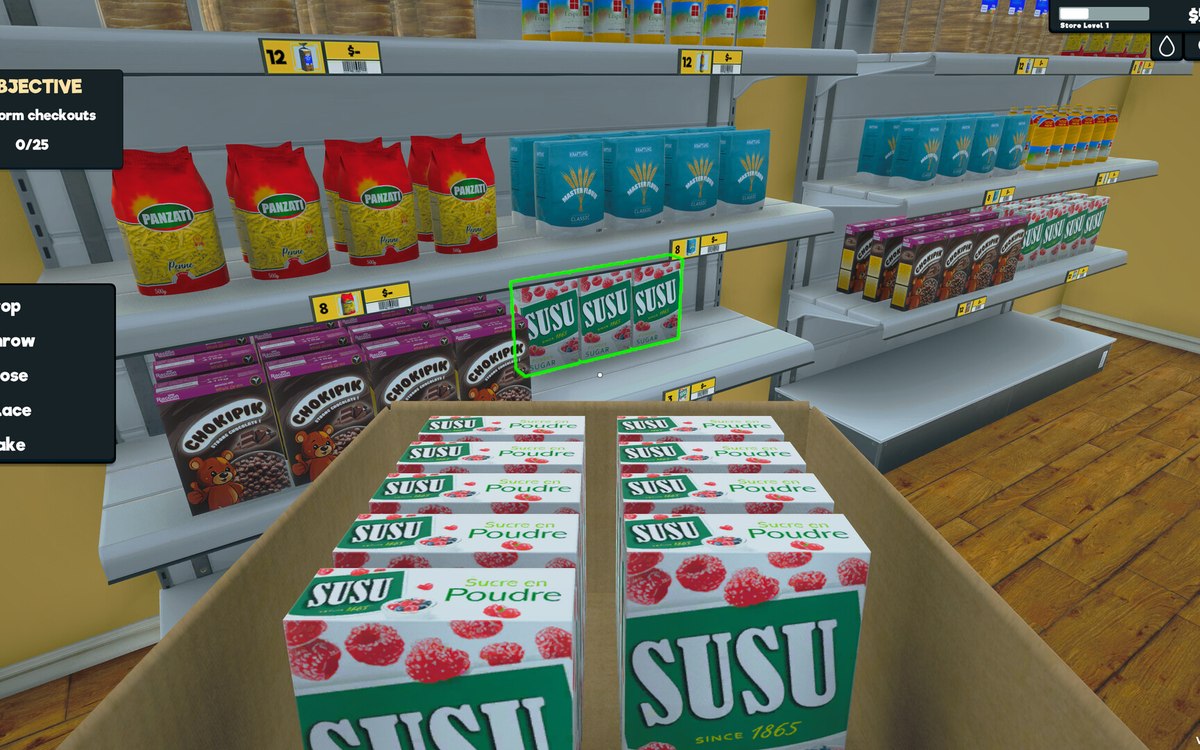 Layout and decorationRestock areas and vehiclesThere is a dedicated restock area for boxes.
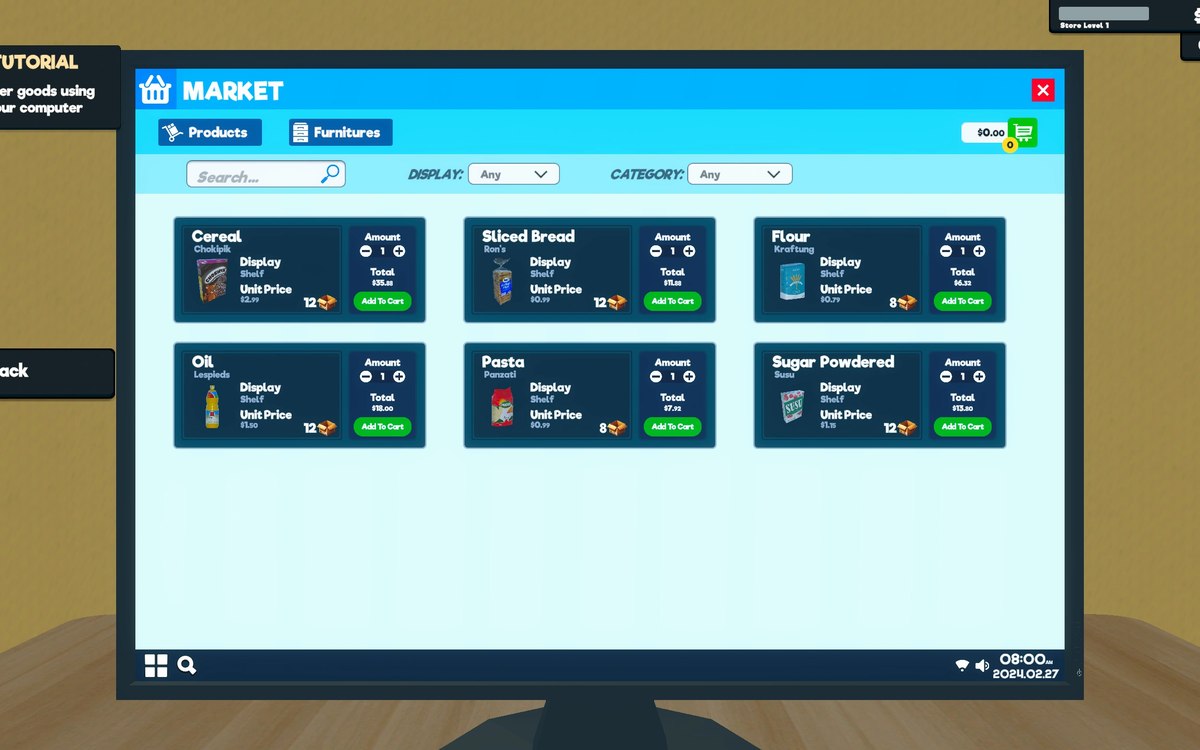 ProductsOrders and what you can orderOrders and their data are modelled by the game.
Version and sources
A local copy of the game, read only. Identifiers are listed on the technical reference pages; nothing here is estimated. Documented build: 1.6.0 (223).