
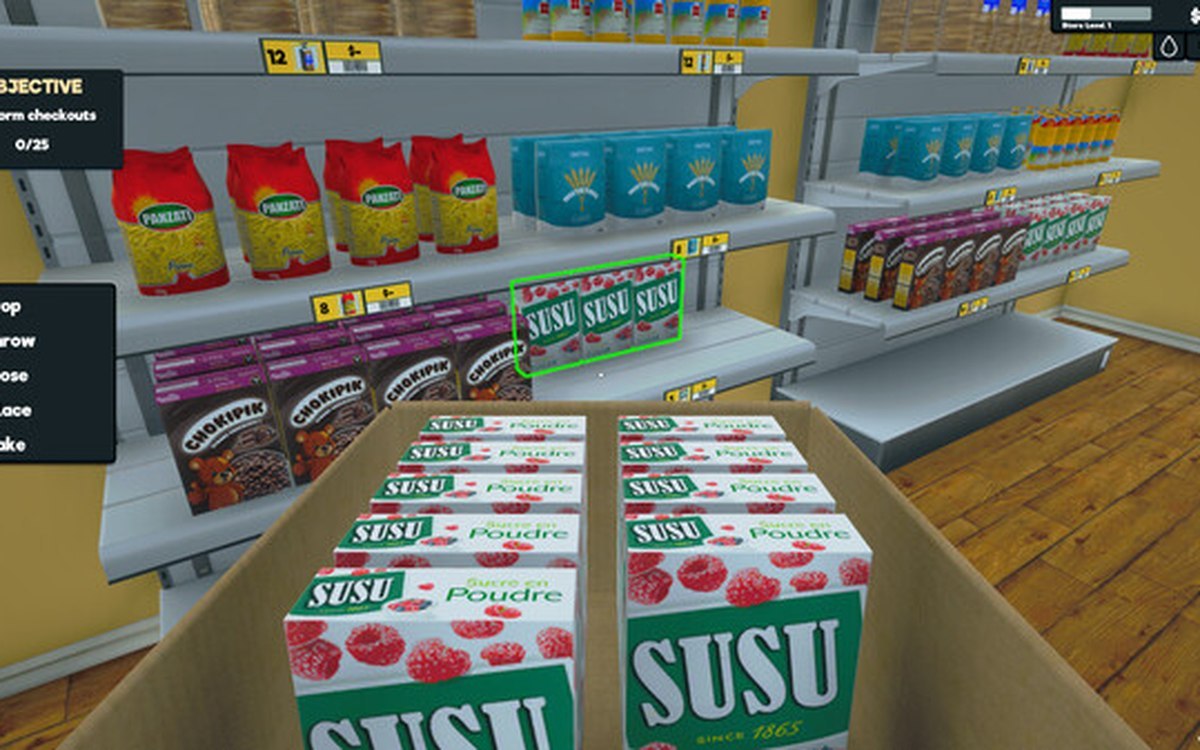
Products · Supermarket Simulator · read from a local copy
The local market and product costs
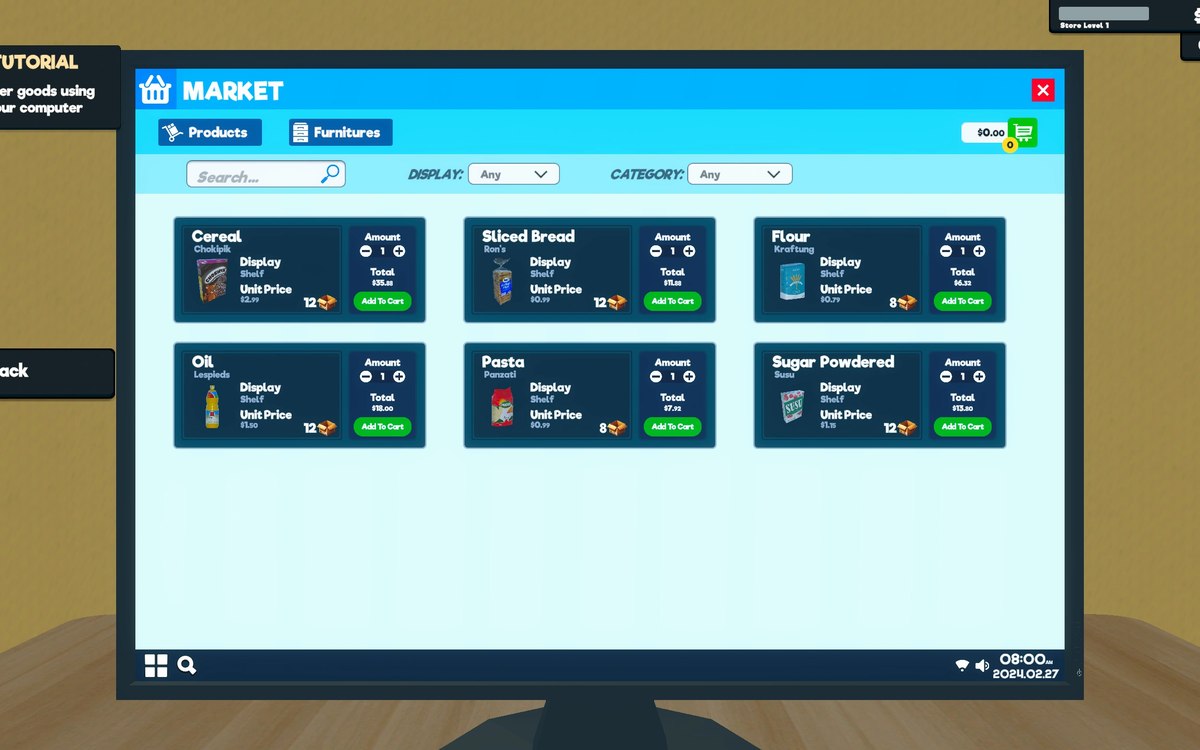
The game keeps a local market with its own product database.
Prices in Supermarket Simulator come from somewhere: the game keeps a local market with a product database, a product cost and a price display, so what you pay and what you charge are tracked, not invented.
What the game establishes
- The game keeps a local market with its own product database. (checked against the game's own files)
- A product cost and a displayed price are tracked separately. (checked against the game's own files)
- The market system includes a shopping cart and a store controller. (checked against the game's own files)
- The build keeps cart data of its own. (checked against the game's own files)
- Cleanliness is tracked against the shop's standing. (checked against the game's own files)
In play
The game keeps its own product database for the market, which is why costs can change without you editing anything on the shelf.
Cost and display price are separate things in that market data, so the number you paid and the number a customer sees are two different numbers.
There is a shopping cart and a store controller in the same system, which is why the market behaves like a place you interact with rather than a static price list.
The cart carries a record of its own. The build keeps cart data alongside the cart object, which is why what a cart holds can be read by the game and not only by the player pushing it.
What this entry does not tell you: how fast prices move, by how much, or which goods move first. We have not verified those numbers, so we do not print them.
Related
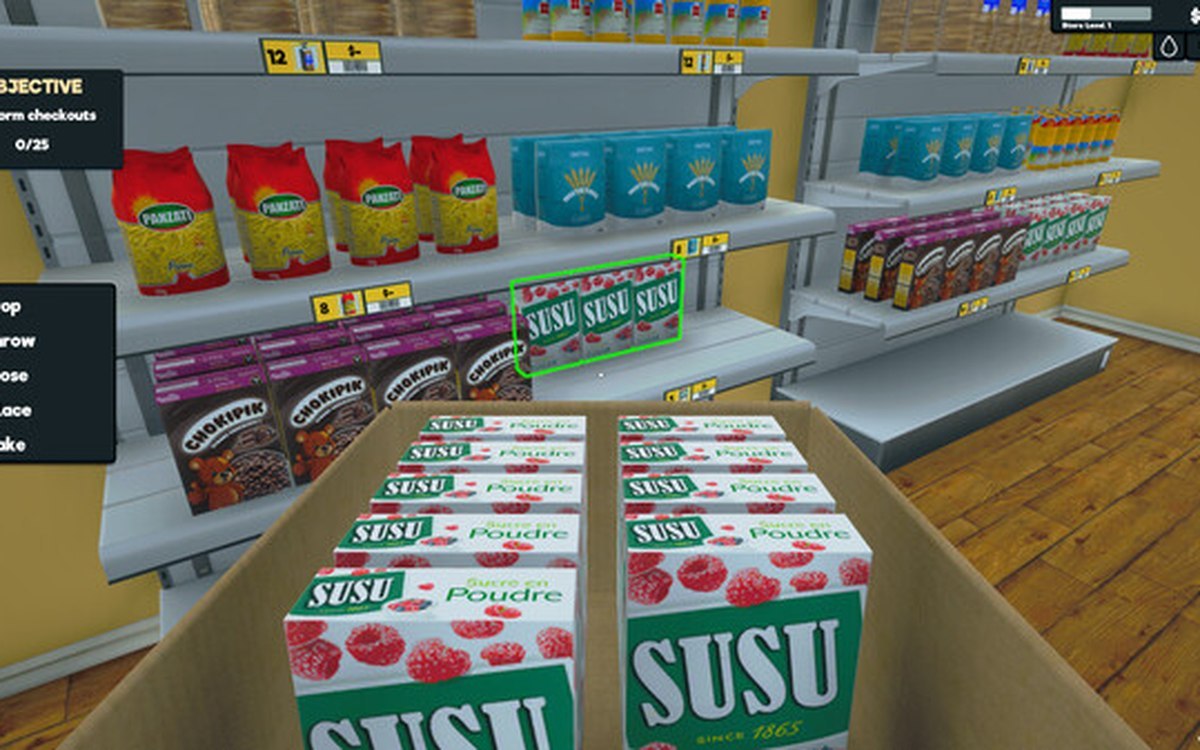 ProductsSetting prices in bulkPrices can be set in bulk through a dedicated manager and panel.
 ProductsOrders and what you can orderOrders and their data are modelled by the game.
Version and sources
A local copy of the game, read only. The grounding for each fact is listed on the technical reference pages; nothing here is estimated. Documented build: 1.6.0 (223).