
Running the shop · Supermarket Simulator · read from a local copy
Dirt, dust and rubbish are three jobs
Cleaning is split into named actions for dirt, dust and rubbish.
Cleaning a Supermarket Simulator shop is not one task: the game names a separate action for dirt, for dust and for rubbish, keeps a cleaning container and a kind of cleaning, marks its props as dirty in their own right, and gives rubbish bins and bags of its own.
What the game establishes
- Cleaning is split into named actions for dirt, dust and rubbish. (checked against the game's own files)
- There is a cleaning container of its own. (checked against the game's own files)
- Cleaning has a kind of its own, so jobs can be told apart. (checked against the game's own files)
- A prop can be dirty, and dirtiness is a state of its own. (checked against the game's own files)
- Rubbish has bins and bags of its own. (checked against the game's own files)
- Cleaning something has a tracked state and an animation of its own. (checked against the game's own files)
- A worker can be given the cleaning routine. (checked against the game's own files)
- Dust has particles of its own, in a plain and a volumetric form. (checked against the game's own files)
- The bags and bins are named in the build: two rubbish bags and the shop's own, with a bin base, a smoke effect and a collection sound. (checked against the game's own files)
In play
Cleaning is split. The game names one cleaning action for dirt, a second for dust and a third for rubbish, which is why mopping a floor, dusting a surface and clearing rubbish are three jobs rather than one button.
There is a container for cleaning, so what is being used or carried while cleaning is a thing of its own rather than only an action performed on a surface.
Cleaning has a kind. There is a kind of cleaning of its own, which is how the game tells one sort of cleaning from another instead of treating every wipe as the same act.
Props can be dirty in their own right. A prop can be marked as dirty and dirtiness is a state of its own, so the game can know something is dirty without the dirt object being the only record of it.
Rubbish has its own objects. There are bins and bags of its own, which is why clearing rubbish is not the same act as washing a surface.
The work is tracked. Cleaning something has a state of its own and an animation of its own, and a worker can be given the cleaning routine, so the job can be handed over rather than only done by hand.
Dust is drawn as well as tracked. There is a dust particle system of its own with a volumetric form beside it, which is why a dusty surface can be seen before it is dealt with rather than only counted.
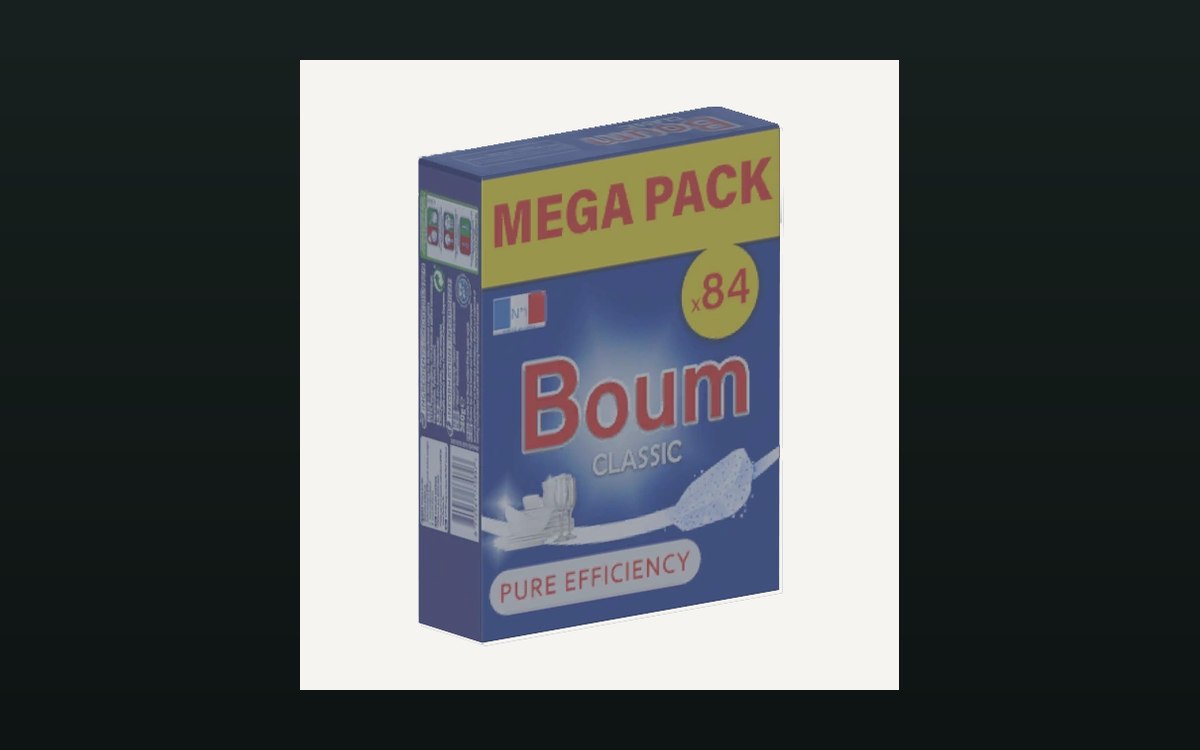
The picture beside this entry is the game's own: the texture of its rubbish bags, one of the objects the rubbish job is about.
What this entry does not tell you: how dirty something has to get before it matters, how long a job takes, or how many bins a shop holds. We have not verified those numbers, so we do not print them.
Related
 Running the shopDirt, mess and cleaningDirt is its own object in the game.
 StaffWho keeps the shop cleanThere is a cleaning worker with an item of their own.
 Running the shopCleanliness and the shop's standingCleanliness is tracked against the shop's standing.
Version and sources
A local copy of the game, read only. The grounding for each fact is listed on the technical reference pages; nothing here is estimated. Documented build: 1.6.0 (223).