
Running the shop · Supermarket Simulator · read from a local copy
Security cameras and guards
The game ships security cameras you place in the shop.
Supermarket Simulator lets a shop defend itself: the game ships security cameras you place and watch, and a security guard with behaviour and equipment of his own.
What the game establishes
- The game ships security cameras you place in the shop. (checked against the game's own files)
- A camera has an interaction and its own saved record. (checked against the game's own files)
- The game also has a security guard with behaviour and states of his own. (checked against the game's own files)
- A guard carries equipment and an antenna with a detection area. (checked against the game's own files)
- Cameras are carried on the network for a shared shop. (checked against the game's own files)
- Guards are identified individually. (checked against the game's own files)
- The shop's cameras are held together by a manager of their own. (checked against the game's own files)
- A guard's behaviour is kept as data of its own. (checked against the game's own files)
- The game ships its own icon for the door detector that works with the shop's security. (checked against the game's own files)
- A guard patrols through modes and states of its own, including a patrol mode, a guard mode and a patrol state. (checked against the game's own files)
- It has a chase state as well for when there is something to go after. (checked against the game's own files)
- The surveillance camera is a modelled piece with sheets of its own: a base map, a normal map, a mask map and an emissive sheet. (checked against the game's own files)
- The same camera carries a led with an off and an on state, and the security set has an alarm sound of its own. (checked against the game's own files)
- A camera is placed with a volume of its own in the scene. (checked against the game's own files)
In play
Security is equipment here. The game ships cameras you fit to the shop rather than a passive penalty for theft, which is why watching the shop is something you set up.
Cameras are placed objects. A camera has an interaction and a visible state of its own, so it is bought, sited and then used rather than simply switched on.
They are saved like anything else. A camera carries its own saved record, which is why where you put one is remembered rather than reset each day.
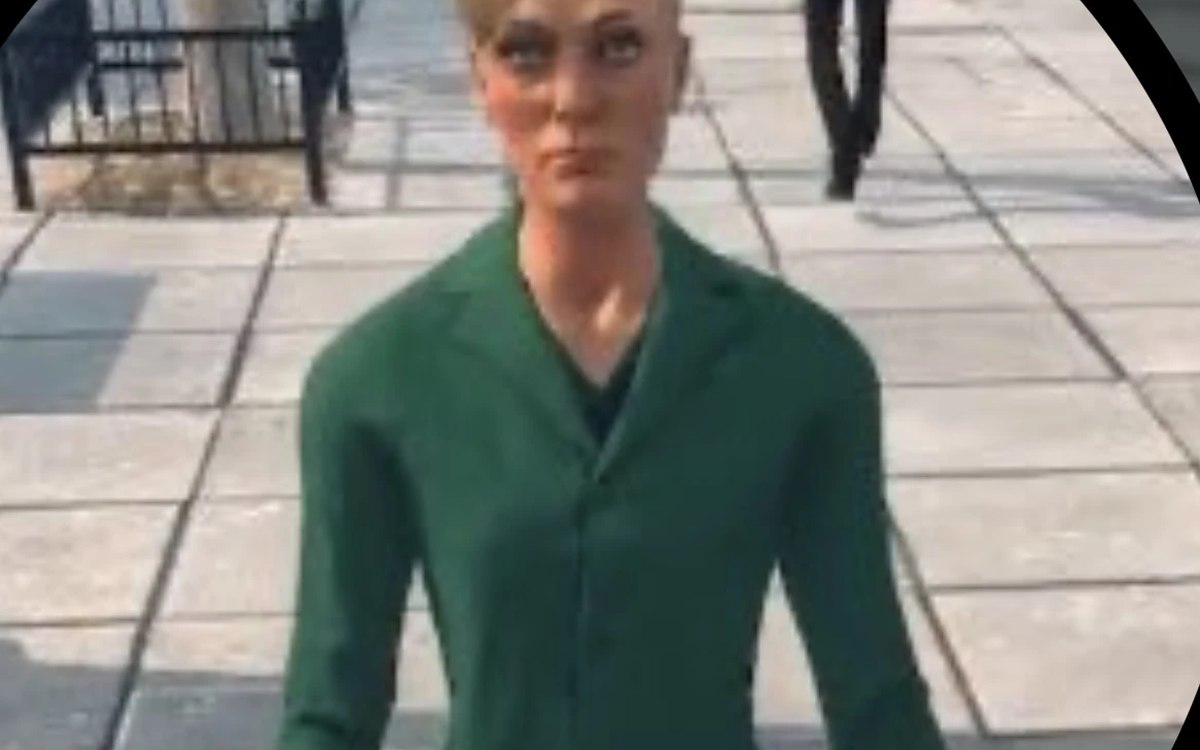
There are guards as well. The game has a security guard with behaviour of his own and a state controller, so a guard patrols rather than standing where you left him.
A guard has equipment. The guard carries an item and has an antenna with a detection area, which is why the shop can notice something without you looking at it.
A guard has a routine rather than a single job. It patrols through a patrol mode and a guard mode, with a patrol state of its own, which is why being watched by one is different from being watched by a camera that never moves.
Patrolling is not the only thing it does. A guard can be in a chase state instead, which is why the same worker can walk a route and then go after someone without being a different machine.
It works in a shared shop. Cameras are carried on the network, so in a joint shop everyone sees what the cameras see.
There is something holding it together. The cameras are run by a manager of their own, and a guard's behaviour is kept as data rather than as a script attached to the model.
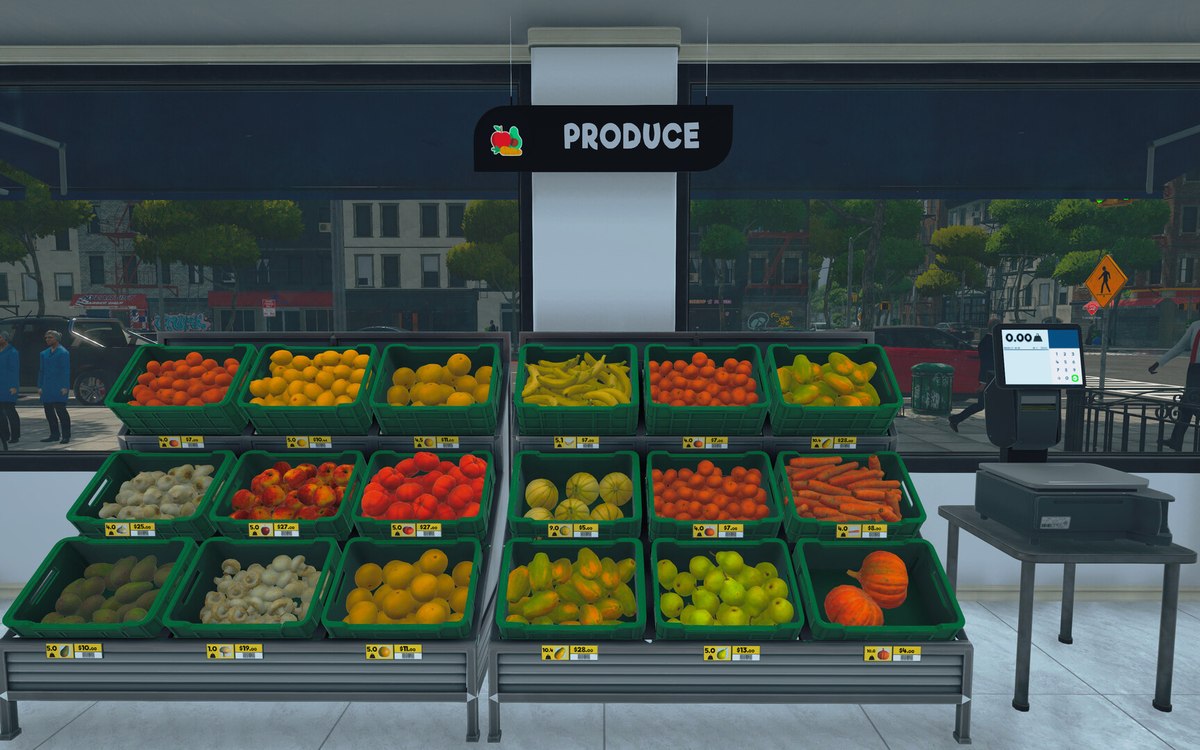
The pictures beside this entry are the game's own: the camera texture it ships, the guard's own artwork, and the icon for the detector that stands at the door and works with the same security.
What this entry does not tell you: what a camera or a guard costs, how far one reaches, or whether either actually reduces theft. We have not verified those numbers, so we do not print them.
Related
 CustomersShoplifters and the door detectorA shoplifter is its own kind of behaviour in the game.
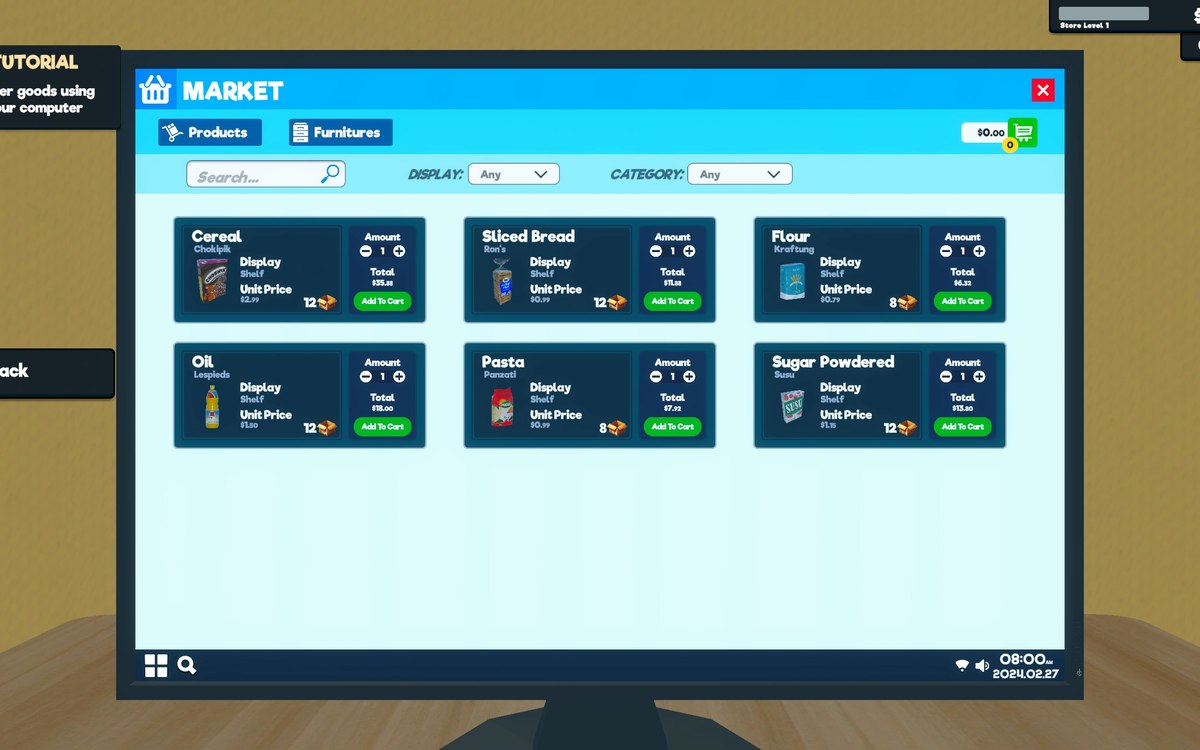 Running the shopThe shop computerThe shop computer is an object of its own with its own desk.
Version and sources
A local copy of the game, read only. Identifiers are listed on the technical reference pages; nothing here is estimated. Documented build: 1.6.0 (223).