
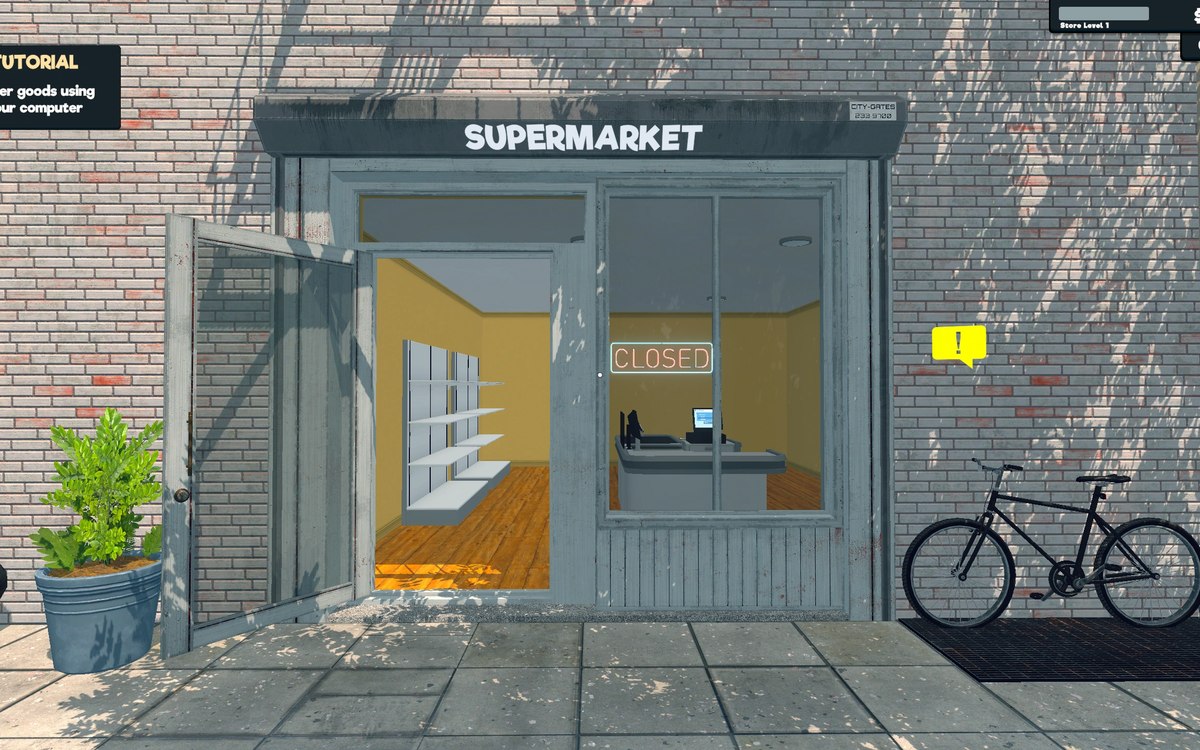
Vehicles · Supermarket Simulator · read from a local copy
The road traffic and its signals
Traffic follows waypoints that carry data of their own, with a navigator that works along them.
The street outside the shop has traffic of its own: it follows waypoints and reports when one is reached, vehicles change lanes, the signals report their own state, and the game ships the road signs the traffic obeys.
What the game establishes
- Traffic follows waypoints that carry data of their own, with a navigator that works along them. (checked against the game's own files)
- A waypoint reports when it has been reached. (checked against the game's own files)
- Vehicles change lanes as part of following a route. (checked against the game's own files)
- A traffic light reports a change of its own state. (checked against the game's own files)
- The street's traffic is held together by a manager and a holder of its own. (checked against the game's own files)
- The game ships its own textures for road signs and a traffic barrier. (checked against the game's own files)
- The street's traffic exists in a shared form as well as a local one, so it can be kept in step between players. (checked against the game's own files)
- A car belongs to a type, and the street keeps a pool of vehicles instead of building one each time. (checked against the game's own files)
- A car appearing is announced to a listener, and vehicles report being added and removed, with a crash of its own. (checked against the game's own files)
- Vehicles carry a lights part of their own, with a second version of it. (checked against the game's own files)
- The street's signals have a behaviour and a colour set of their own, and the traffic keeps options of its own. (checked against the game's own files)
- A pedestrian crossing and an intersection each have signal data of their own. (checked against the game's own files)
- There are lights that stop waypoints, so a signal can hold the traffic on a route. (checked against the game's own files)
In play
The traffic follows a route rather than wandering. It runs on waypoints, each with data of its own, and a navigator that works along them, which is why the vehicles on the street keep to a path instead of drifting across the road.
A waypoint can report that it has been reached. That is how the game knows a vehicle has passed a point on its route rather than only where it is at this moment.
Vehicles change lanes as part of following that route, so a car can move across the road without the street being rebuilt around it.
The street's signals report their own state. A traffic light announces when it has changed, so what the traffic does can follow the lights rather than the lights being decoration.
The street behaves as one system rather than as cars that happen to be near each other: the traffic is held together by a manager and a holder of its own.
The street is accounted for rather than guessed at. A car belongs to a type, the game keeps a pool of them instead of building one each time, and a car appearing is announced while vehicles report being added and removed.
A car carries lights of its own, with a second version of that part, so the traffic's lights are a thing the vehicles have rather than only something on the street.
The signals have more than a state. There is a behaviour and a colour set for the lights of the street, and the traffic keeps options of its own, which is why the same signals can be set up differently.
The street exists in a shared form as well as a local one, so the traffic can be kept in step when a shop is played with other people.
Crossings and junctions are separated. A pedestrian crossing and an intersection each have signal data of their own, so the lights of the street are set up place by place rather than all at once.
A light can hold a route as well as show a colour. There are lights that stop waypoints, which is how a signal makes the traffic wait rather than merely being looked at.
The game ships the signage the street obeys. Its own textures include a sheet of road signs and a traffic barrier, and the picture beside this entry is that sign sheet.
What this entry does not tell you: how many vehicles the street holds, how fast they move, or whether anyone crosses at the lights. We have not verified those numbers, so we do not print them.
Related
 Running the shopThe street outside the shopThe street has a petrol station with a pump of its own.
 VehiclesHow a vehicle drives and answers the controlsA vehicle has a controller of its own, with a separate one for the car kind.
 VehiclesInside a vehicle: dashboard, steering and fuelThe dashboard is an object inside the car rather than a screen of its own.
Version and sources
A local copy of the game, read only. The grounding for each fact is listed on the technical reference pages; nothing here is estimated. Documented build: 1.6.0 (223).